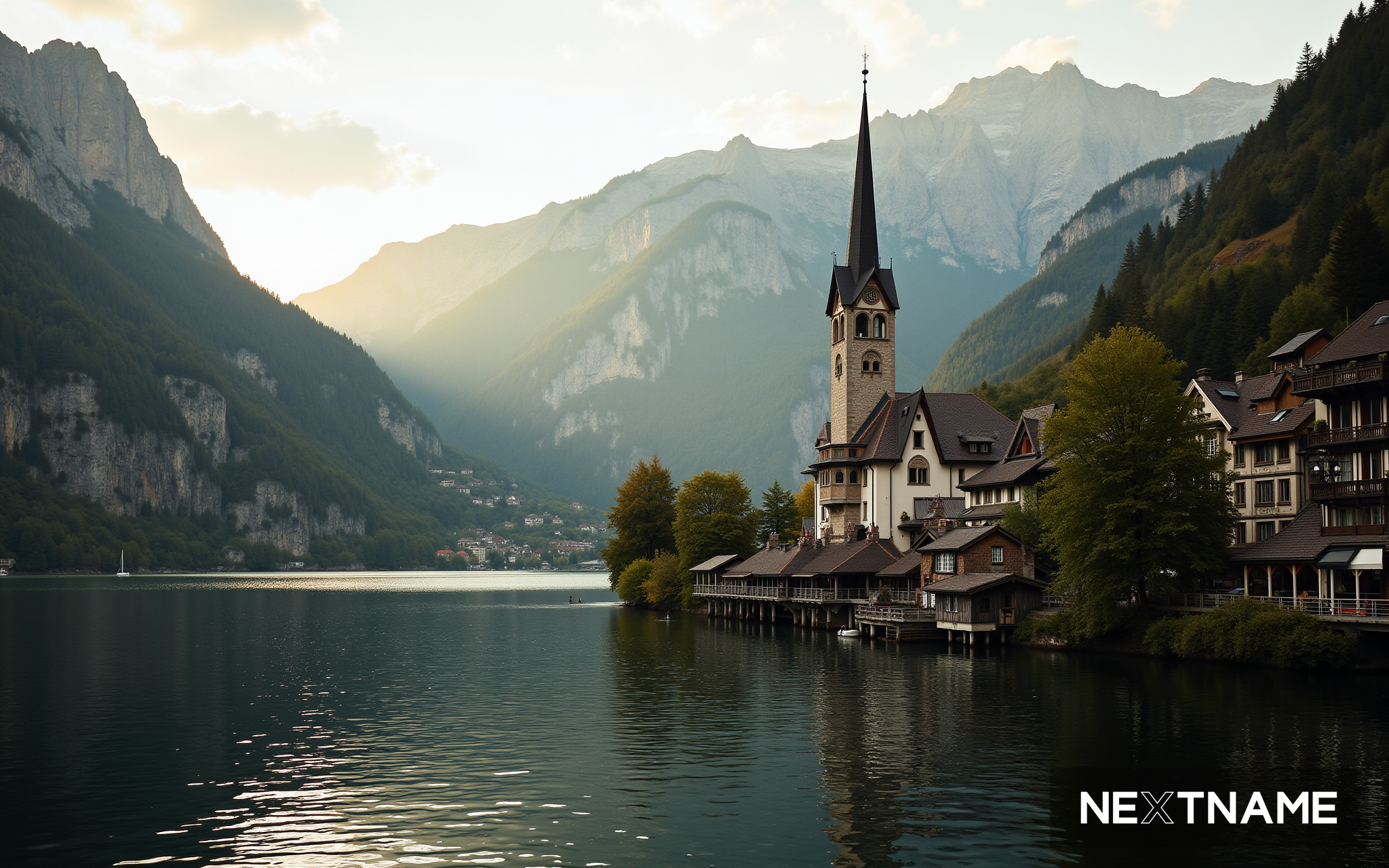
Interlaken feels like the Swiss version of a well‑organized base camp. The town splits into two halves — Interlaken Ost, where the bars and souvenir shops spill onto the lively Höheweg, and Interlaken West, a quieter stretch hugging the Aare river with cafés that open onto the lake promenade. You’ll find the Höhematte park just a short walk from the main station, a wide green space where locals spread blankets for a picnic and kids chase each other around the playground. A quick bus ride takes you to Staubbach Falls, where the water drops 298 metres in a single, dramatic plunge; the view is worth the 15‑minute uphill walk, even if you’re only carrying a light daypack.
If you love mountain scenery paired with easy access to food that actually tastes like Switzerland, this is your spot. The vibe is relaxed but tourist‑friendly — think a steady stream of backpackers, couples on weekend getaways, and families with kids who want a safe, well‑marked trail network. You’ll eat raclette at Restaurant Eiger, where a plate of melted cheese with potatoes and pickles costs around CHF 22, and you can sip a glass of local white wine for roughly CHF 9 at a nearby tavern. The town itself isn’t cheap — a coffee will set you back about CHF 5, and a decent dinner at a mid‑range restaurant hovers near CHF 35 — but the price reflects the convenience of being a launchpad for hikes, boat rides on Lake Thun, and the famous Jungfraujoch “Top of Europe” train.
Who should book a stay here? Anyone who wants a reliable hub for day trips without spending hours navigating public transport. The 2‑hour train from Zurich and the 30‑minute ride from Lucerne make it a painless jump from the big cities, and the surrounding area offers everything from gentle lakeside walks to more serious climbs up the Harder Kulm (the cable car up takes about 10 minutes, then a short summit trail). If you’re after nonstop adrenaline, you might feel a little restrained; if you prefer a solid, well‑served town that lets you unpack, refuel, and head out again, Interlaken delivers exactly that. It’s not a secret retreat, but it’s a practical choice that lets you focus on the mountains instead of figuring out logistics.
Sightseeing
- Harder Kulm – Panorama platform – Take the funicular up to the viewpoint for a 360° sweep of the Alps, the lakes and the town below. $25 round‑trip, 2 hours (including ride and photo time).
- St. Beatus Caves & Waterfall – Slip into the limestone caves and walk behind the thundering waterfall that inspired countless postcards. $12 entry, 1½ hours.
Food & Drink
- Café de Paris – Sip a creamy hot chocolate or bite into a freshly baked Streuselkuchen while watching the world drift by on the main promenade. $8‑$12 per item, 45 minutes.
- Restaurant Taverne – Dig into a hearty plate of Bernese plattdeutsch “Käsefondue” made with local Gruyère and a glass of crisp Swiss white. $22 main, 1 hour.
Outdoor Nature
- Aare River Gorge hike – Follow the well‑marked trail through the emerald‑green gorge; the water’s roar is oddly soothing. Free, 2 hours.
- Panorama Trail to Heimweh Waterfall – A short climb rewards you with a mist‑kissed cascade and a view that feels like a postcard come to life. Free, 1 hour.
Nightlife
- Bar 31 – Grab a craft beer on the rooftop and watch the sunset paint the Alps pink; the vibe stays relaxed until midnight. $6‑$9 drinks, 2 hours.
- Old Police Club (Alte Polizei) – Dance to local DJs in a converted police station; the crowd is a mix of backpackers and Swiss locals. $5‑$8 drinks, 3 hours.
Cultural
- Interlaken Museum – Explore exhibits on the town’s tourism boom and the ancient Celtic settlements that once dotted the valley. $7 entry, 1 hour.
- Lake Thun boat tour with live folk music – Glide across the glassy water while a local quartet plays traditional alphorn tunes. $18 round‑trip, 2 hours.
Day Trip
- Lauterbrunnen Valley – Catch the early train to the “Valley of 72 Waterfalls”; hike to the base of Staubbach Falls and breathe in alpine air. $15 round‑trip train, 5 hours total.
- Thun – Old Town & Castle – Wander cobblestone lanes, peek into the 12th‑century castle keep, and treat yourself to a Thunersee‑style fish sandwich. $10 entry + $12 meal, 4 hours.
Budget – $80‑$130 per night
- Backpackers Villa Interlaken – city centre, a 3‑minute walk to the main train station and the Höheweg shopping stretch – cheap dorms and private rooms that let you stretch your travel budget without sacrificing location.
- Hotel Bären – Old Town (Altstadt), right by the historic town hall – a no‑frills, family‑run inn that puts you in the heart of Interlaken’s cobblestone charm for a pocket‑friendly price.
Mid‑range – $150‑$220 per night
- Hotel Interlaken – central, steps from the Höhenweg promenade and the iconic Höhematte park – comfortable rooms with mountain‑view balconies and a breakfast spread that feels like a Swiss home‑cooking experience.
- Hotel Alpenhof – quiet lakeside side of town, a short stroll to Lake Thun’s promenade – a boutique‑style hotel with spacious suites and a rooftop terrace that lets you unwind after a day of hiking.
Luxury – $350‑$600 per night
- Victoria‑Jungfrau Grand Hotel & Spa – city centre, directly opposite the train station and a stone’s throw from the lake – five‑star service, a world‑class spa, and rooms that frame the Alps in floor‑to‑ceiling windows.
- Hotel Eiger – west side of Interlaken, offering unobstructed views of the Eiger’s north face – an elegant retreat with historic décor, a gourmet restaurant serving Swiss specialties, and concierge‑arranged excursions to the surrounding peaks.
How to get to Interlaken
Getting into Interlaken is a breeze if you know the shortcuts. The village sits in the heart of the Bernese Oberland, but most travelers arrive via one of three airports that actually serve the region.
Airports you’ll use
- Zurich Airport (ZRH) – 85 km north. It’s the biggest hub in Switzerland and the one most tour operators use. From the terminal you can hop on a direct InterCity train to Interlaken Ost; the ride takes about 2 hours, give or take a few minutes for the occasional delay.
- Geneva Airport (GVA) – 200 km southwest. The train from the arrivals hall to Interlaken takes roughly 3 hours, but the scenery along Lake Geneva is worth the extra time if you’re not in a rush.
- Basel Airport (BSL) – 150 km northwest. A fast EuroCity train will get you to Interlaken in about 1 hour 45 minutes, making it the quickest rail link if you land in the northwest corner of the country.
If you’re coming from a smaller regional airport—say, EuroAirport in nearby Mulhouse or the private shuttle strips in Lucerne—you’ll still end up on one of the three main rail lines. All three stations have luggage lockers, so you can stash a suitcase while you explore the town’s main promenade.
Flight times from the big hubs
- New York (JFK/EWR) → Zurich (ZRH) – about 7 hours nonstop. Expect to pay anywhere from $800 to $1,500 for a round‑trip economy ticket in peak summer; off‑season you can snag deals near $650.
- London (LHR) → Zurich (ZRH) – roughly 1 hour 20 minutes. British Airways, EasyJet and Swiss all run multiple daily flights. Prices hover between £120 and £300 if you book a few weeks ahead.
- Dubai (DXB) → Zurich (ZRH) – around 6 hours 30 minutes with a single stop in either Frankfurt or Istanbul. A typical economy fare in high season runs $1,200‑$1,800; low‑season can dip below $900.
- Hong Kong (HKG) → Zurich (ZRH) – about 13 hours with one or two connections (usually via a European hub). Expect $1,400‑$2,200 round‑trip, give or take the airline you pick.
Alternative ground transport
If you’re already in Europe and want to skip the airport shuffle, the Swiss rail network makes a direct Interlaken stop from almost any major city. From Munich you can catch a night train that drops you off early morning; from Paris the TGV gets you to Bern in about 7 hours, then a short regional train to Interlaken. The rides are comfortable, and you’ll get a glimpse of the Alps without ever stepping onto a plane.
Visa basics for U.S. citizens
Good news: you don’t need a visa to step foot in Switzerland if you hold a U.S. passport. The country is part of the Schengen Area, so you can stay for up to 90 days within any 180‑day window without extra paperwork—just a valid passport (must be good for at least six months beyond your departure date) and proof of onward travel if you’re asked at the border. If you’re planning a longer stay or work, you’ll need to apply for a specific permit, but for a typical vacation the process is as simple as showing up.
Bottom line on cost
Airfare to Zurich (the most convenient gateway) typically lands in the $800‑$1,500 range for U.S. travelers, depending on when you book and which airline you pick. If you’re flexible with dates and willing to hop on a low‑cost carrier from a secondary hub like London or Frankfurt, you can shave a few hundred dollars off the price. Once you’re in the air, the train to Interlaken is covered by the Swiss Travel Pass if you plan to explore more of the country—another way to keep the budget in check.
So, whether you’re chasing the first sunrise over the Jungfrau peaks or just need a quick base to sample the local Rösti (about CHF 12 per plate) and a hearty Lake trout fillet (CHF 22), getting there is straightforward. Pick the airport that lines up with your flight schedule, hop on the train, and you’ll be strolling along the Höhenweg promenade in under three hours. Safe travels.
If you’re eyeing Interlaken, pick your month wisely. The town sits in the Bernese Oberland, sandwiched between Lake Thun and Lake Brienz. Weather flips fast, crowds swell in summer, and hotel prices swing with the calendar. Below is a month‑by‑month rundown that ties weather, visitor volume, price shifts and the events that actually shape a stay.
January – February
Cold bites hard. Daytime highs hover around 2 °C, nights dip below –5 °C. Snow blankets the valleys, perfect for ski‑area trips to Männlichen or Grindelwald. Tourist numbers sit low; you’ll find empty streets around the Höheweg. Hotel rooms drop to CHF 120‑150 for a double in the Oberstadt area. No major festivals, but the “Swiss Winter Festival” in nearby Lauterbrunnen runs through February, offering torchlight parades and local cheese soup (fondue) for about CHF 18 a bowl.
March – April
Spring teases the region. Temperatures climb to 10 °C in the valleys, but rain showers are common. Crowds begin to creep up, especially around Easter when Swiss families head out. Hotel rates hover near CHF 150‑180. The “Interlaken Spring Market” in late March sells handmade chocolates and rösti plates for CHF 22. If you love blooming meadows, aim for early April; the snow‑capped peaks still hold their white coat.
May – June (sweet‑spot shoulder)
Sunshine dominates. Daytime temps reach 18‑22 °C, evenings stay mild. Tourist flow is moderate; you’ll share the promenade with a few hikers but not the throngs of July. Hotel prices settle around CHF 170‑200 for a mid‑range stay, and flights from major EU hubs dip 10‑15 % compared to peak summer. The “Interlaken Music Festival” kicks off in early June, filling the Kursaal with classical concerts. A dinner of raclette at Restaurant Eiger costs roughly CHF 28, and a 30‑minute BOB train ride lands you in Lauterbrunnen for a quick waterfall hop.
July – August (peak)
Heat spikes to 25‑28 °C in the valleys, while the lakes stay cool. Crowds hit their highest; Interlaken’s main square feels packed, especially on weekends. Hotel nights climb to CHF 250‑300, and flight tickets surge 20‑30 % from spring. The “Swiss National Day fireworks” on August 1 light up the sky over the Aare, a must‑see if you don’t mind the crush. For a cheap bite, grab a bratwurst from a street vendor near the train station for CHF 6. If you can tolerate the buzz, the long daylight (up to 15 hours) lets you hike the Harder Kulm trail well into the night.
September – October (second sweet‑spot)
Early September still feels summery, but the air turns crisp by late September. Daytime highs settle around 15 °C, with occasional rain. Visitor numbers drop sharply after the school holidays, and hotel rates fall back to CHF 150‑180. The “Unspunnen Festival” in early September celebrates Swiss traditions with folk music, cheese‑making demos and a massive cattle parade — tickets run CHF 35. In October, the “Alpabzug” (cattle descent) brings farmers down from the mountains; the spectacle is best viewed from the Oberhofen lakeshore, and a warm bowl of soup at a local chalet costs about CHF 12. The scenery shifts to golden larches, and the crowds feel like a comfortable gathering rather than a rush.
November – December
Winter returns with a vengeance. Temperatures hover around 0 °C, snow returns to the valleys, and the festive lights on the Höhematte park create a cozy vibe. Tourist flow drops to a trickle; you can snag a room in the historic Hotel Interlaken for CHF 130‑160. The “Interlaken Christmas Market” runs through early December, offering mulled wine (Glühwein) for CHF 5 and handcrafted ornaments. If you love quiet, snow‑covered streets and the chance to sip hot chocolate by a fireplace, this period feels magical — just pack warm layers.
Bottom line
If you crave mild weather, manageable crowds and reasonable prices, aim for late May to early June or mid‑September to early October. Both windows give you access to the lakes, hiking trails and local eateries without the summer price tag or the winter chill. For pure spectacle — fireworks, folk festivals or snow‑capped peaks — July, August and the early December market deliver, but be ready to pay a premium and share the space with many others. Choose the month that matches your travel style, and you’ll get the most out of Interlaken’s Alpine charm.
January, December, and February are the strongest windows for snow conditions.
Scores blend climate, rainfall, and activity fit — snow. Temperatures and rainfall are historical monthly averages; actual conditions vary year-to-year.
Forecast data from Open-Meteo · refreshed hourly
What travelers say.
Loading reviews…
Sign in to leave a review.
Sign in →If Interlaken is your speed, try these.
Banff
🇨🇦 CA91%Banff feels like a compact mountain town that somehow manages to hold a whole national park inside its borders. The streets around Banff Avenue are lined with boutique shops and cafés that stay open l…
Queenstown
🇳🇿 NZ90%Queenstown feels like a compact adventure hub that never lets you forget the lake’s glassy surface is the town’s beating heart. The main strip around **Lakefront** is lined with cafés that serve serio…
Jackson Hole
🇺🇸 US88%Jackson Hole feels like a place where the mountains have a say in everyday life. The town itself is compact, centered around the town square with its iconic elk antler arches, but the real action spre…